 Skip to content
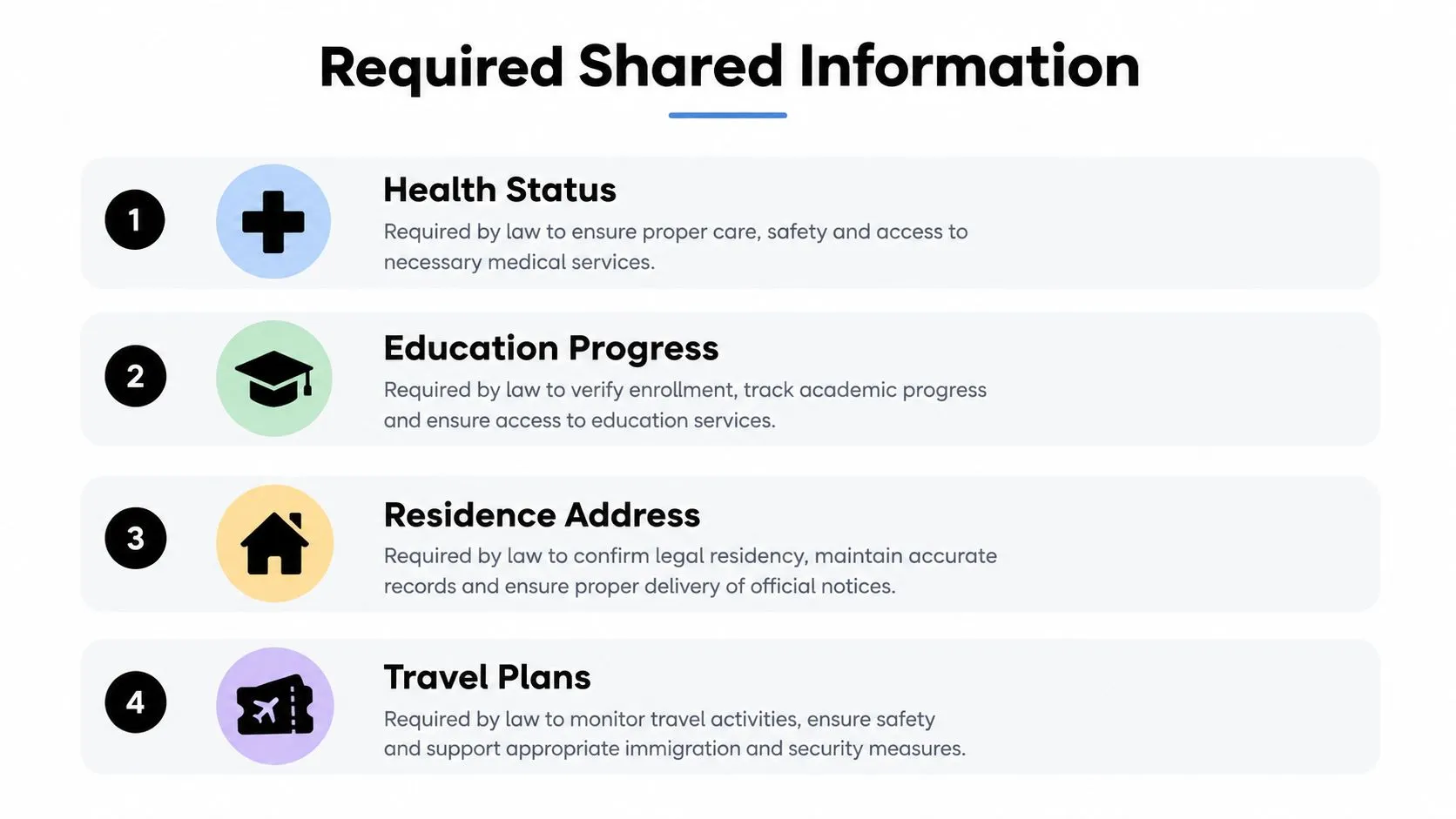
Texas law requires parents to share significant information about a child's health, education, and welfare. If a parent begins living with someone known to be a registered sex offender, or marries or plans to marry that person, notice is generally due within 40 days after beginning to live together or 10 days after marriage.
You may be dealing with this duty right now because the other parent changed the child's school, a doctor reported a serious concern, or a new adult moved into the home. Co-parenting can feel tense even when both parents want to do what's right. Clear rules matter because uncertainty can quickly become conflict.
Texas Family Code § 153.076 provides a practical framework for sharing important information. It treats communication about a child's health, education, welfare, and household safety as a legal responsibility connected to custody, not as a favor between former partners. The court order in your case may contain additional instructions, so read it carefully and obtain legal advice if its language is unclear.
Understanding Your Legal Duty to Share Information
A parent may wonder, “Do I need to tell the other parent about this?” Consider a child who develops a serious medical issue while staying with one parent. The parent might hesitate to share the news because communication has become hostile. Another parent may learn about a school change from the child instead of from the school or co-parent. These situations create stress, but Texas law gives parents a starting point.
Under Texas Family Code § 153.076, a court must order each conservator to share significant information about the child's health, education, and welfare in a timely manner. The statute appears in Chapter 153, which governs conservatorship, possession, and access. The Texas Family Code's statutory framework for conservatorship, possession, and access places this duty alongside the broader custody rules guided by the child's best interest.
“Timely” doesn't mean a parent must report every minor detail. It means significant information shouldn't be held back until the delay harms the child or prevents the other parent from responding appropriately. A new diagnosis, serious school concern, or major welfare issue usually deserves prompt attention.

Practical rule: If the information could reasonably affect the child's safety, health, schooling, or daily care, communicate it promptly and keep a record of what you shared.
This duty supports cooperative parenting. It doesn't require parents to agree about every decision, and it doesn't erase a court order. It creates a baseline so one parent isn't left in the dark about matters that affect the child.
Who Is Covered Under This Statute
The statute uses the term conservator, which generally means a person given legal rights and duties concerning a child. A conservator may be a parent, but legal custody labels can vary depending on the court order. The important question is not whether a person identifies as the “primary” or “non-primary” parent. The question is what rights and duties the order gives that person.
A joint managing conservatorship means both parents share certain rights and responsibilities. It doesn't necessarily mean equal time, equal decision-making power, or identical possession schedules. One parent may have the child for more overnights, while both parents still have meaningful legal responsibilities and access to important information.
A possession schedule controls when a parent has physical time with the child. The schedule may be negotiated, ordered by the court, or based on a standard arrangement. It's separate from the duty to communicate significant information. A parent who has fewer overnight periods still may need timely health, education, and welfare updates.
What sole managing conservatorship changes
A sole managing conservatorship gives one parent exclusive authority over certain decisions. That label doesn't automatically mean the other parent loses every right to information. Texas law separately recognizes parental access to information and records, and a court may limit those rights when safety or another legally valid concern requires it.
Grandparents and caregivers should also avoid assuming that regular involvement alone creates the same statutory duties as a conservator. Their rights depend on the court order and the legal role they hold. A grandparent with conservatorship rights may have responsibilities that differ from those of a grandparent who only provides care.
The underlying policy is the best interests of the child. In plain English, that means the court focuses on arrangements that protect the child's safety, stability, development, and meaningful relationships with capable parents. Information sharing helps the court's custody structure work in real life because both parents can respond to what the child needs.
What Information Must Be Shared and When
Section 153.076 covers two related responsibilities. The first is a general duty to share significant information. The second involves specific safety disclosures with firm deadlines.
Start with the child's health, education, and welfare
Ask whether the information could affect the child's care or require action by the other parent. Examples may include:
- Health changes: A new diagnosis, serious injury, significant treatment, or major medical recommendation.
- Education developments: A school change, substantial academic concern, disciplinary issue, or important educational meeting.
- Welfare concerns: A serious behavioral change, safety issue, or circumstance affecting the child's daily well-being.
The statute doesn't turn ordinary co-parenting into a report about every conversation, scraped knee, or homework assignment. The focus is on significant information, shared in a timely way.
The duty exists even when parents disagree. You can tell the other parent what happened without giving up your position about treatment, school placement, or another dispute. Keep the message factual, child-focused, and connected to what the other parent needs to know.
Treat household safety disclosures as deadline matters
Section 153.076 also addresses a parent who begins living with, marries, or plans to marry someone known to be a registered sex offender or someone charged with a registerable offense. The notice deadlines are generally:
- Moving in: Notify the other parent no later than the 40th day after beginning to reside with that person.
- Marriage: Notify the other parent no later than the 10th day after marriage.
- Planned marriage: The obligation also covers a plan to marry someone within the described category.
These deadlines show why waiting for the “right moment” can create legal risk. If you're unsure whether a person's record falls within the statute, speak with a Texas family law attorney promptly instead of guessing.
The statute works with Texas parents' information and record rights under Section 153.073, which separately addresses access to information and records. A child's wishes may also become relevant in a custody decision, as discussed in Does a Child Get to Choose Which Parent in Texas?, but a child's preference doesn't replace a parent's communication duty.
Exceptions and Confidentiality Limits
Transparency doesn't mean every piece of personal information must be disclosed without limits. A court order may restrict contact or information sharing, and a protective order or documented safety concern may change how communication should occur. The specific language of your order matters.
A parent shouldn't use privacy as a reason to hide significant information about the child's health, education, or welfare. At the same time, a parent with a credible concern that direct disclosure could endanger the child shouldn't make a rushed decision without legal guidance. The safer approach may involve communication through counsel, a designated third party, or a method required by the order.
Separate personal privacy from child-related information
Your private relationships, finances, and personal disagreements generally aren't the same as information about the child. The duty focuses on matters connected to the child's welfare and the statutory household-safety disclosures. A parent can protect personal boundaries while still providing the information the child's care requires.
For example, refusing to disclose a personal opinion about the other parent isn't the same as withholding a serious medical development. Likewise, sharing a school's important notice isn't an invitation to debate every parenting choice.
Safety first: If disclosure could expose a child or protected person to danger, ask an attorney how to comply without violating a protective order or creating a new risk.
School-related disagreements often make this distinction difficult. Parents can review Texas custody and school enrollment rules to better understand how educational decisions and communication may interact with the custody order.
Don't assume that a general preference for confidentiality overrides § 153.076. Don't assume the statute requires you to reveal information that a court has specifically protected. When the two concerns collide, individualized legal advice is more reliable than unilateral silence.

Consequences of Noncompliance
The consequences depend on what was withheld, the wording of the order, the parent's intent, and the effect on the child. A missed update about a school meeting and a concealed safety disclosure don't present the same level of concern.
| Situation | Possible legal concern | Sensible response |
|---|---|---|
| A significant health, education, or welfare update wasn't shared | The other parent may seek enforcement of the order | Preserve records and request the missing information in writing |
| A parent repeatedly withholds required information | The pattern may support a court enforcement request or affect future custody disputes | Keep a dated communication log and obtain legal advice |
| A parent fails to provide a required household-safety notice | The law identifies specific deadlines and the conduct may create serious legal exposure | Consult a family law attorney immediately |
For routine noncompliance, the other parent may ask the court to enforce the existing order. Depending on the circumstances, enforcement proceedings can involve requests related to make-up possession, attorney's fees, or contempt. A court evaluates the evidence rather than relying only on one parent's accusation.
The household-safety provision carries a different level of urgency. Texas legal-services guidance explains that marrying or intending to marry a registered sex offender can create criminal exposure, while failing to provide required changes such as contact information may create contempt concerns. The Texas state-issued SAPCR parent order form also reflects these information-sharing and relationship-disclosure duties.
The purpose of enforcement isn't to reward conflict. It's to restore compliance and protect the child. A parent who receives a late notice should preserve the message, identify the relevant date, and speak with counsel before confronting the other parent in a way that escalates the dispute.
Practical Steps for Compliance and Response
Good documentation helps both parents. If you're sending information, it shows that you acted. If you're requesting information, it shows that you gave the other parent a clear opportunity to comply.
If you need to provide notice
Use a written method allowed by the order, such as email, text, or a parenting communication platform. Keep your message short and factual:
“I'm notifying you that [child's name] received information from [provider or school] about [significant event] on [date]. The current recommendation is [brief factual description]. Please let me know if you need the provider's contact information.”
For a household-safety notice, don't improvise language that minimizes the issue. Identify the relevant event and date, state the required information clearly, and retain proof of delivery. If you're close to or beyond a statutory deadline, contact an attorney rather than delaying further.
If the other parent isn't complying
Start a log with the date, the information expected, how you requested it, and the response or lack of response. Save complete email threads, screenshots, school notices, medical records, and calendar entries. Avoid insults or accusations because a judge may later read the messages.
You may also review whether the order specifies a communication method or required contact details. Guidance about electronic communication orders in Texas custody cases can help you identify practical issues before seeking court intervention.
If informal requests fail, an attorney can evaluate enforcement options. Don't withhold your own required information in retaliation. One parent's violation doesn't excuse the other parent's noncompliance.
Common Disputes and Legal Remedies
Parents often disagree about what counts as “significant.” One may believe every school email should be forwarded. The other may think only emergencies require notice. Section 153.076 focuses on significant information about the child's health, education, and welfare, so the facts and the existing order matter.
A cooperative solution can begin with a written communication protocol. Parents may agree to share provider details, school notices, appointment dates, and major changes through one consistent channel. Mediation can help create workable terms without requiring the judge to decide every communication dispute.
Keep the child out of the middle. Parents should exchange information directly rather than asking the child to carry messages, explain adult disagreements, or choose which version of events is correct.
When a parent consistently refuses to share required information, possible court remedies may include enforcement or a request to modify the custody order. A modification is not automatic. The parent seeking one generally needs evidence that the current arrangement no longer serves the child's best interests or that the existing structure isn't working.
Motions to compel are more commonly associated with formal discovery in litigation, while enforcement actions address violations of an existing order. Your attorney can identify the correct procedure, organize the evidence, and help you choose a response proportional to the problem.
Get Help from The Law Office of Bryan Fagan
A parent who misses a deadline may feel panic. A parent who receives no information may feel powerless. Both situations call for calm legal analysis, because the answer depends on the custody order, the relevant dates, the information involved, and any safety restrictions.
The Law Office of Bryan Fagan, PLLC handles Texas family law matters involving custody, visitation, possession, paternity, support, enforcement, modification, and emergency orders. The firm represents mothers, fathers, and grandparents and can help a parent understand whether the facts support informal communication, mediation, enforcement, or a modification request.
Bring your order, relevant messages, dates, school or medical records, and a short timeline to a consultation. Clear records help an attorney assess whether the other parent violated a duty, whether your own notice was sufficient, and what action protects the child without escalating conflict unnecessarily.
For law firms seeking a separate way to manage incoming inquiries, try Heyline for legal intake as an intake resource. It isn't a substitute for legal advice, but organized intake can help a prospective client explain the basic facts before speaking with counsel.
The most important next step is to avoid silence when the law requires timely communication. If you're uncertain, document the issue, follow the current order as closely as possible, and obtain advice before a deadline passes or a disagreement becomes a larger custody dispute.
If you need help with a child custody or visitation case in Texas, our experienced attorneys can review your information-sharing concerns, explain your options under Chapter 153, and help you prepare for enforcement, mediation, or modification when appropriate. Visit Law Office of Bryan Fagan, PLLC to schedule a free consultation and discuss your situation with a Texas family law team.


