 Skip to content
When your child's future is on the line, an unexpected court transfer can feel like the ground has shifted beneath you. You may have spent months preparing in one Texas county, gathering school records, speaking with witnesses, and learning what to expect from the local court. Then a notice arrives saying the custody case must move.
Texas Family Code 155.201 can require that result. The rule is technical, but its purpose is practical: custody disputes should generally be handled where the child's daily life is centered. Understanding the family code 155.201 mandatory transfer of a custody case can help you protect your rights, respond on time, and prepare for the next court.
When Your Custody Case Moves Without You Asking
A parent in Harris County may have prepared for a modification hearing for months. Her attorney has organized witnesses, requested records from the child's school, and reviewed the existing possession schedule. The other parent and child, however, have been living in Travis County for at least six months. When the other parent files a timely motion to transfer, the Harris County case may need to move.
That news can feel unfair. You might worry that a new judge won't understand the history, that witnesses won't want to travel, or that your carefully prepared case has been disrupted. Those concerns are understandable, especially when the case involves visitation, child support, safety, or a child who is already coping with major changes.

The transfer isn't necessarily a decision against you. It also doesn't determine who will become the primary conservator, what possession schedule the parents will follow, or how child support will be handled. It determines which Texas court should hear the case. That distinction matters because venue and custody outcome are related in practice, but they are separate legal questions.
The law focuses on the county where the child has established a real daily life. That may be where the child attends school, receives medical care, participates in activities, and has important community connections. A parent who wants to understand how Texas handles a child's home-state jurisdiction can review this guide to UCCJEA home-state jurisdiction in Texas.
A transfer can change the courtroom without changing the importance of your evidence, your relationship with your child, or your right to be heard.
Whether you're a mother seeking stability, a father trying to preserve parenting time, or a grandparent involved in a child's care, you still have practical choices. The first is to understand why the statute applies. The next is to protect your position before the transfer deadline passes.
What Family Code 155.201 Actually Requires
Texas Family Code § 155.201 is mandatory, not discretionary. In plain English, the judge isn't free to deny a proper transfer just because the original county feels more familiar or convenient. When the statutory facts are established and a party files a timely motion, the law requires the court with continuing, exclusive jurisdiction to transfer the custody-related proceeding.
The central rule is:
Core rule: If the child has lived in another Texas county for six months or longer, and a party timely moves for transfer, the court with continuing, exclusive jurisdiction must transfer the case to the other county. Texas Family Code § 155.201
The six-month residency threshold is the key factual trigger. The child's residence must be examined carefully. A short visit, a temporary trip, or an informal statement about moving isn't automatically the same as living in another county. Records and reliable testimony may help establish where the child has resided.
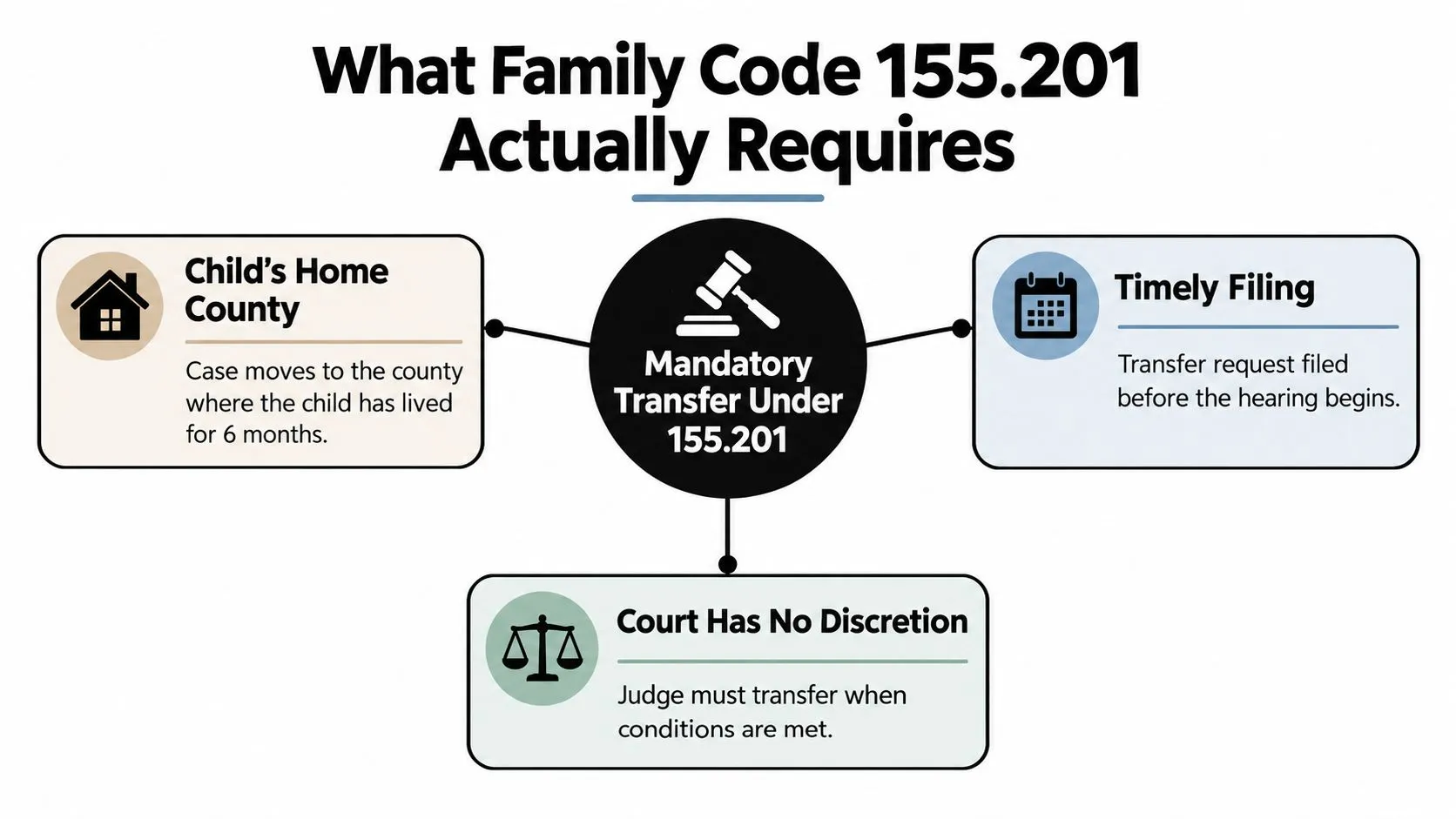
Texas appellate decisions have repeatedly described the court's duty as ministerial. That term means the judge applies the statute to established facts instead of balancing personal views about convenience, fairness, or which county seems better. Once the legal conditions are met, transfer is required.
Why the child's county matters
Moving the case can place important evidence closer to the court. Teachers, counselors, relatives, healthcare providers, and other witnesses may live near the child's current home. School records and community information may also be easier to present in the county where the child's daily life occurs.
Section 155.201 also includes a separate mandatory-transfer path when a dissolution of marriage or adoption case is pending in another court. That provision reflects a broader policy of keeping related family-law proceedings together instead of allowing parallel litigation in different forums.
The venue rule doesn't replace the best interests of the child standard. Best interests means the court evaluates the child's safety, stability, emotional needs, relationships, and practical circumstances when making custody decisions. If family violence is part of the history, Custody When There Is a History of Family Violence explains how abuse or violence can change custody presumptions.
How the Transfer Process Works Step by Step
The transfer process rewards careful attention to dates. A parent who believes the case belongs in another county should not rely on an informal request to the clerk or a conversation with the other parent. The request must be made through the proper legal filing, and the responding party must understand the limited time available to contest it.
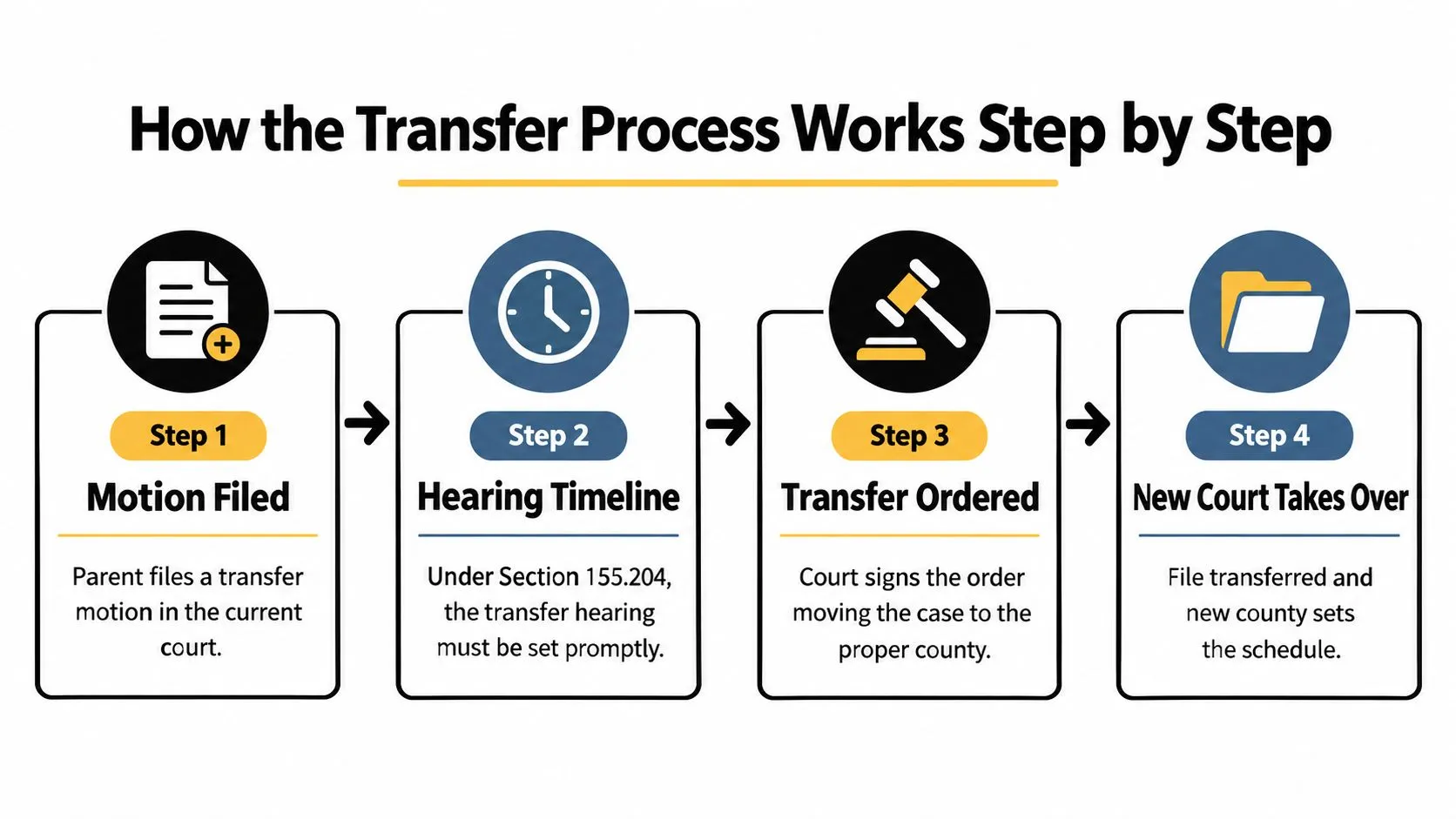
Step 1: A party files the motion
The process begins when a parent or another authorized party files a motion to transfer in the court that currently has continuing, exclusive jurisdiction. The motion should identify the statutory basis for transfer and provide facts supporting the child's residence in the other Texas county.
That usually means reviewing residence history, school information, medical records, and the existing custody order. A lawyer can help distinguish a legally meaningful residence from a short-term visit or an uncertain move.
Step 2: The other party reviews the motion
The responding parent may contest the factual basis for transfer by filing a controverting affidavit. This is a sworn statement disputing the facts supporting the motion. It might address the child's actual residence, the timing of the move, or another issue recognized by the statute.
The response must be timely. Missing the deadline can limit the opportunity to challenge transfer, even if the responding party believes the original county is more practical.
Step 3: The court follows the statutory schedule
Under Texas Family Code § 155.204, if a timely transfer motion is filed and no controverting affidavit is filed, the proceeding must be transferred without a hearing no later than the 21st day after the final date for filing the affidavit. The statutory transfer procedure provides the framework for that timeline.
If a controverting affidavit is filed, the court may need to address the dispute under the applicable procedure. The court's role remains tied to whether the statutory conditions exist, not to a broad comparison of which county feels more comfortable.
Step 4: The receiving court organizes the case
After transfer, the receiving court takes responsibility for future proceedings. That can include a modification request, enforcement issues, possession disputes, or related matters within the court's authority.
Texas appellate opinions from 2003 through 2024 have consistently enforced the six-month rule and the mandatory character of transfer, as reflected in the statutory overview above. Parents should therefore treat the filing and response deadlines as serious legal deadlines, not flexible scheduling suggestions.
A possession schedule remains a separate issue. For example, the Expanded Standard Possession Order in Texas addresses how an expanded schedule can give the non-primary parent more time. A transfer doesn't automatically create that schedule, but it may determine which court considers a request for one.
Emergency Orders and Enforcement During Transfer
A parent may face a child-safety concern, a temporary restraining order, an emergency custody request, or an enforcement action while the underlying case is changing courts. That overlap can make a simple question feel urgent: which court should act, and does an existing order still matter during the transition?
Mandatory transfer and emergency jurisdiction address different problems. Texas Family Code § 155.201 requires transfer when its statutory conditions are met. Emergency jurisdiction can allow a court to respond to an immediate danger, but it does not necessarily eliminate the continuing, exclusive jurisdiction of another court or prevent the SAPCR from being transferred. For a clearer explanation, see when Texas can exercise emergency custody jurisdiction. The governing statute is available in the Texas Family Code provisions addressing emergency jurisdiction and transfer.

What transfer does and doesn't mean
Transfer does not automatically stop every proceeding or answer whether a temporary order remains effective. The result depends on the order's terms, the type of request, the court's jurisdiction, and the facts supporting the emergency. An enforcement matter may also require a separate response while the custody case is being moved.
Tell your attorney about urgent developments immediately. A child-safety concern requires prompt attention, while a transfer issue should not lead you to miss a hearing, response deadline, or existing court requirement.
Safety first: If a child may face immediate harm, seek appropriate emergency help and legal guidance immediately. Venue analysis should not delay a necessary protective response.
Enforcement claims may involve possession, support, or communication requirements. Keep current orders, notices, messages, school communications, and records connected to the emergency or alleged violation. Those materials can help the appropriate court understand what happened while the transfer is pending.
Why Venue Matters for Your Custody Outcome
Venue is more than a courthouse address. The county where a case proceeds can affect how easily the court receives evidence about the child's current life and how accessible important witnesses are. It can also change scheduling logistics and the local procedures that shape hearings.
| Factor | Original County | Child's Current County |
|---|---|---|
| Witnesses | Witnesses may need to travel from the child's present community. | Teachers, relatives, providers, and other local witnesses may be closer. |
| School evidence | Records may come from outside the court's local community. | School records and school-based testimony are tied to the local setting. |
| Medical and community evidence | Providers and community contacts may be farther away. | The court is closer to the child's current support network. |
| Local practice | Counsel may already understand the court's scheduling customs. | Counsel and family must prepare for a different court's local practices. |
| Practical logistics | Hearings may require travel away from the child's daily environment. | Proceedings are located where the child's life is centered. |
A transfer does not guarantee a faster hearing or a better result. It can, however, change the practical work required to present your case. A father seeking more possession may need to update his witness plan. A mother responding to a transfer may need to organize school and healthcare records differently. A grandparent may need to explain how their relationship fits into the child's current support system.
Parents who need to understand the filing location can review this guide to filing for custody in the correct Texas county. For general drafting context, drafting a venue change motion may also help explain how these requests are organized, although a custody transfer under Chapter 155 involves Texas-specific rules that deserve individualized legal review.
Practical Steps for Parents and Grandparents
A possible transfer becomes easier to manage when you turn uncertainty into a short list of tasks. Start by identifying the child's actual residence history and the deadlines shown on the filed documents. Don't wait until a hearing date is close if the motion or affidavit deadline is already running.
Read every filing carefully. Confirm the court named in the motion, the county where transfer is requested, the stated residence facts, and every response date. If a phrase is unclear, ask a Texas family-law attorney to explain its practical effect.
Gather evidence of the child's current life. School enrollment, attendance information, medical appointments, activity records, and community ties may help establish where the child lives and who has regular knowledge of the child's needs. Organize documents by date so your attorney can review them efficiently.
Protect your response deadline. If you oppose transfer, ask counsel whether a controverting affidavit is appropriate and when it must be filed. If you support transfer, make sure the motion accurately states the facts and complies with the applicable procedure.
Rebuild the witness plan. Contact information may have changed, and some witnesses may be more useful in the receiving county. Identify teachers, relatives, healthcare providers, childcare professionals, and others who can speak from personal knowledge.
Keep following current orders. A venue dispute doesn't erase your responsibilities under an existing custody or support order. Keep records of exchanges, missed possession, support payments, and communications.
Parents and grandparents deserve a fair opportunity to present reliable information about the child. Administrative support can also help a family-law practice track documents and deadlines. For background on how virtual assistants help family law firms, consider how organized legal teams may manage intake and case information while the attorney handles legal strategy.
The Law Office of Bryan Fagan, PLLC assists Texas families with custody, visitation, modifications, enforcement, support, and emergency custody matters. Whether you're a mother, father, or grandparent, personalized advice can help you understand which facts matter and what action is available.
Finding Your Next Steps with Confidence
A mandatory transfer can feel like losing control, especially when you expected to remain in a familiar court. But the move doesn't erase your history with your child or decide the custody questions by itself. It places the proceeding in the county Texas law identifies as more closely connected to the child's present life.
The strongest response is organized and timely. Preserve your current orders, collect records showing the child's residence and daily needs, identify witnesses who know the child directly, and ask counsel to review every deadline. Mothers seeking protection, fathers seeking meaningful possession, and grandparents seeking a continuing role all deserve an explanation that fits their facts instead of a one-size-fits-all answer.
The legal terms can sound intimidating. Continuing, exclusive jurisdiction refers to the court's ongoing authority over the custody case, while venue transfer concerns the proper county for the proceeding. Joint managing conservatorship means both parents share certain rights and duties, but it doesn't require equal or nearly equal possession time. A possession schedule sets when each parent spends time with the child, including holidays and school breaks. Texas law provides detailed possession schedules, including spring-break provisions under the standard possession order, but the appropriate schedule still depends on the child's best interests and the court's order.
If you need help with a child custody or visitation case in Texas, our experienced attorneys can guide you every step of the way. Contact The Law Office of Bryan Fagan, PLLC today for a free consultation.
The Law Office of Bryan Fagan, PLLC offers guidance on Texas custody transfers, modifications, enforcement, visitation, support, and emergency orders. Contact the firm to review your transfer deadline, evidence, and next steps in a free consultation.


