
When your child's future is on the line, understanding your rights matters most. A relocation notice can turn an ordinary week into a stack of hard questions, travel calendars, and worried conversations at the kitchen table. If you're the parent staying put, or the parent preparing to move, the core issue isn't just distance. It's how to protect your relationship with your child when weekly routines no longer work.
Long-distance and virtual possession in Texas has to do more than fill gaps on a calendar. A workable parenting plan has to fit the best interests of the child, support a realistic possession schedule, and give both parents a clear path for staying involved. In Texas family law, that usually means looking beyond a standard alternating-week routine and building something more specific, more durable, and easier to enforce if conflict shows up later.
What Long-Distance Possession Really Means for Texas Families
A parent hears the move announcement and immediately starts doing the math. How many weekends disappear? Who drives? What happens when school starts, a child gets sick, or a holiday lands in the middle of an already long trip? That is the moment long-distance parenting stops being a theory and becomes a daily planning problem.
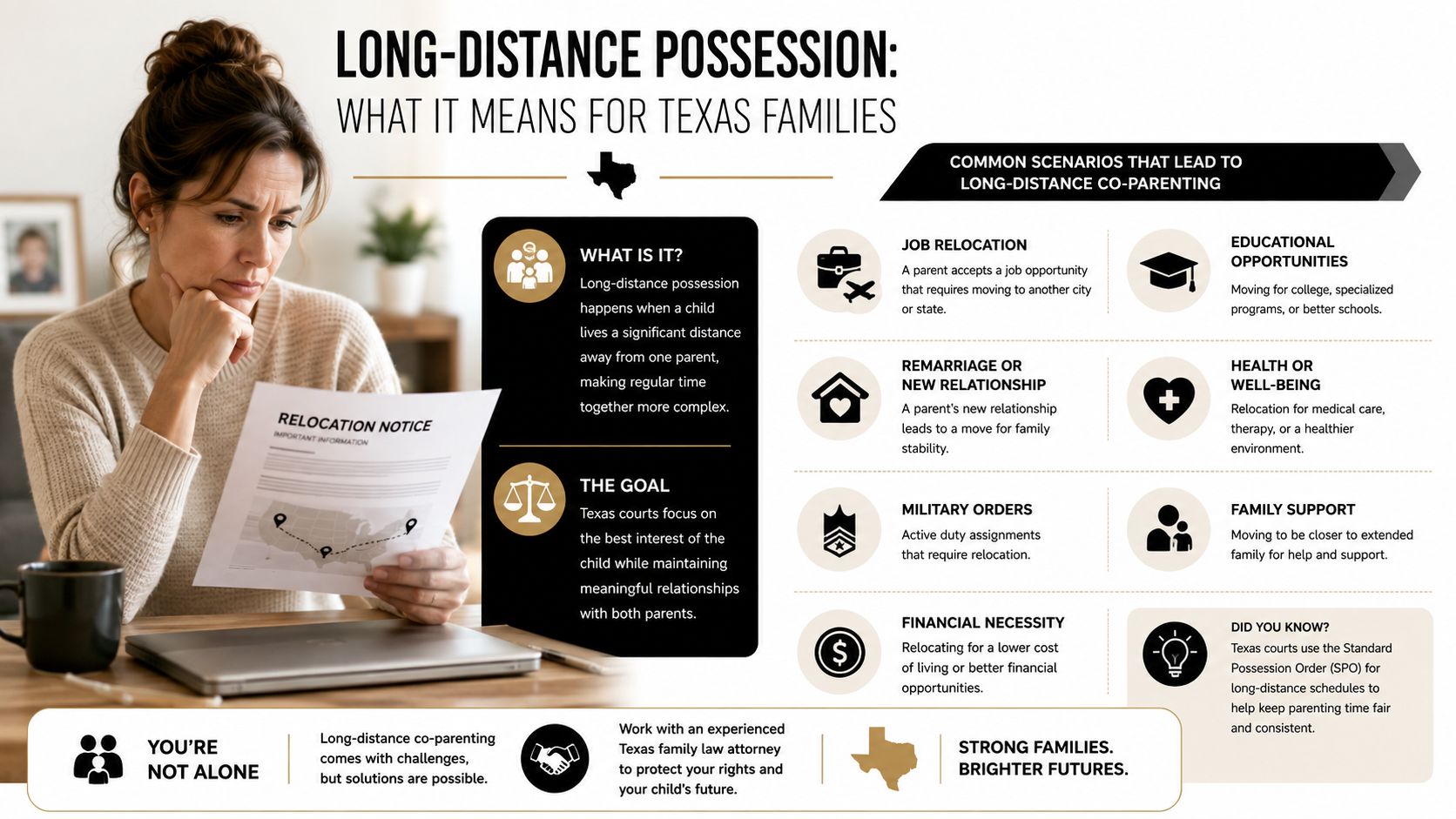
Distance changes the shape of parenting time
Texas parents often assume custody is just custody, no matter where everyone lives. Once travel gets long enough, the plan changes from frequent exchanges to larger blocks of time, especially around school breaks, holidays, and summer. Nebraska Extension notes that in many U.S. states, the practical threshold for long-distance visitation is about 180 miles one way, a distance that is well beyond routine weekly exchanges and usually calls for a redesigned schedule for school breaks, holidays, and extended summer periods. That kind of distance does not just add drive time, it changes the actual share of parenting time a child experiences. Nebraska Extension
Relocation research points in the same direction. In one U.S. study, when adolescents' parents did not move, fathers accounted for 35% of yearly parenting time, but that fell to 28% when mothers moved with the children and to 21% when fathers moved away. The point is straightforward. Distance changes contact frequency, weekday exchanges, and the ease of shared care.
Joint managing conservatorship still needs a usable schedule
In plain English, joint managing conservatorship usually means both parents keep legal rights and duties, but that does not automatically mean equal time. Texas courts still care about the best interests of the child, which means the schedule has to work in real life, not just on paper. A child needs stability, predictable routines, and a plan that adults can follow.
That is why a long-distance order has to look different from a standard local schedule. Shared care over hundreds of miles often depends on school calendars, transportation arrangements, and virtual contact that keeps the relationship warm between visits. A German study found that when separated parents lived under 10 km apart, shared custody was used in 41.7% of cases, but at distances of 40 km or more, shared custody dropped to only 3.4% to 4.3%. That contrast shows how quickly distance changes the model of parenting time. German study
The practical takeaway is direct. A long-distance plan is a different animal, because it has to preserve the parent-child bond when regular face-to-face contact becomes harder to maintain. For a plain-English overview of what a Texas parenting plan must address, see Parenting Plans in Texas Custody Cases.
The Self-Assessment Questions That Shape a Workable Plan
Before anyone writes proposed order language, the family has to answer a few honest questions. If that step gets skipped, the schedule often collapses later because the plan was built on hope instead of logistics. A workable long-distance plan starts with the child's calendar, the parents' work demands, and the travel budget that may be uncomfortable to discuss but still controls the ultimate outcome.
How far apart will you really live
Distance is more than a point on a map. Oregon court self-help materials use a Medium/Long Distance Parenting Plan for parents living more than 60 miles apart, which shows how courts treat distance as a scheduling issue, not just a travel inconvenience. Texas long-distance possession rules begin at more than 100 miles in the Family Code, and many U.S. parents experience a practical long-distance break point around 180 miles one way. Those references help families see where their own situation fits on the spectrum. Oregon court forms, Texas long-distance parenting plan overview
If the move is across town, a standard possession schedule may still work. If the distance reaches across the state or beyond, the plan usually has to shift toward fewer but longer periods of possession. School breaks and summer vacation then become the backbone of the order, because they give the child real blocks of time instead of hurried handoffs.
Who pays, who drives, and what happens if a trip is missed
Travel costs can poison even a decent co-parenting relationship if the order leaves them vague. The order should say who books flights, who drives, who pays first, and whether a missed flight or delayed pickup creates makeup time. When parents leave transportation unassigned, they often end up fighting about a problem the court could have settled in one paragraph.
The child's school and medical schedule matter just as much. A child with tutoring, sports, or regular medical appointments needs a plan that does not wreck weekday routines. The same is true for sleep and screen time. Long-distance parenting only works when the child can move between homes without constant disruption.
Practical rule: If the answer requires a text thread, it belongs in the order.
A useful drafting method is to start with the child's current routine and work backward. A parent shaping this kind of plan should think about the handoff points, any time zone difference, and whether a child can handle travel after school or only during breaks. A general Texas resource on the moving parts of possession orders is the Standard Possession Order overview, which helps show how a long-distance plan departs from the usual local pattern.
Parents also need to ask whether equal time is even realistic. Texas does not treat equal possession as automatic, which is why Is 50/50 Possession the Default in Texas? belongs in this conversation.
Building the Possession Schedule Under Texas Family Code Section 153.313
A parent in Austin may be trying to plan around a child in El Paso, while the child is still tied to school, sports, and weekday routines. That is the practical problem Texas long-distance orders have to solve. The order has to fit the statute, but it also has to fit real travel, real calendars, and real life, or it will turn into a source of constant arguments instead of a usable plan.
The decision tree
Once parents live more than 100 miles apart, the noncustodial parent can choose between the standard weekend pattern under Section 153.313(a)(1) and an expanded schedule built around one weekend each month. That choice changes the rest of the order, because the expanded approach usually depends on shorter midweek contact and more exact language for holiday and summer possession. For a broader overview of how these long-distance orders work, see the Texas standard possession order overview.
The better question is not which version sounds more generous. It is which version fits the child's school calendar, the parents' travel costs, and the distance between homes without creating a steady stream of disputes. If a weekend-to-weekend exchange would lead to missed flights, long drives, or constant late arrivals, the order should say so and use longer blocks that both parents can follow.
A simple comparison helps parents see the difference.
| Element | Standard Long-Distance | Expanded Long-Distance |
|---|---|---|
| Weekend time | Standard weekend pattern under Section 153.313(a)(1) | One weekend each month |
| Midweek visits | Less likely to fit the structure | Shorter midweek visits may make up time |
| Holiday and summer time | Needs clear blocks because regular exchanges are hard | Also needs clear blocks, plus more detailed make-up mechanics |
| Best fit | Families with workable travel under the standard pattern | Families who need fewer but more predictable visits |
Draft language that keeps the order usable
The best order language reads like instructions a tired parent could still follow on a Friday afternoon. A proposed order should avoid legal clutter and spell out the parts people usually fight about later.
The noncustodial parent shall exercise possession under the long-distance schedule selected in the order. The parties shall follow the school calendar for extended holiday and summer periods, and any missed time caused by travel delays shall be addressed with make-up possession only if both parents can agree in writing or the court orders otherwise.
That wording does a few things at once. It ties possession to the school calendar, it tells parents what happens when travel goes wrong, and it keeps the plan from becoming a text-message negotiation every time a flight is late. When those details are missing, the order leaves room for arguments about who owes time, who owes money, and whether the missed visit gets replaced at all.
A version for the expanded option can be written just as plainly.
The noncustodial parent shall have one weekend each month, with any additional midweek contact scheduled in advance and coordinated around the child's school obligations. Transportation responsibilities, arrival times, and make-up time for cancelled travel shall be stated with enough detail that both parents can follow the plan without further negotiation.
That kind of language matters because long-distance schedules fail in the gaps. If the order does not say who arranges travel, who pays first, and what happens after a delayed pickup, the parents end up deciding those questions on the fly. A court can settle those points in one order, and that usually saves everyone more conflict later.
Texas parents also need to keep one more reality in view. A long-distance case does not automatically turn into an equal-time case just because one parent asks for it. The court still looks at what is workable for the child, not what sounds balanced in the abstract. A possession schedule built on practicality gives the child more stability, and it gives both parents fewer reasons to argue over every handoff.
A clear possession schedule lowers conflict more than a clever one does.
Designing a Virtual Contact Protocol That Actually Works
Long-distance parenting falls apart when “we'll keep in touch” is the only plan. A phone call here and a video chat there are fine in theory, but children need a pattern they can count on. The primary task is to make virtual contact feel ordinary enough that it becomes part of the child's life, not just an emergency substitute for missed in-person time.
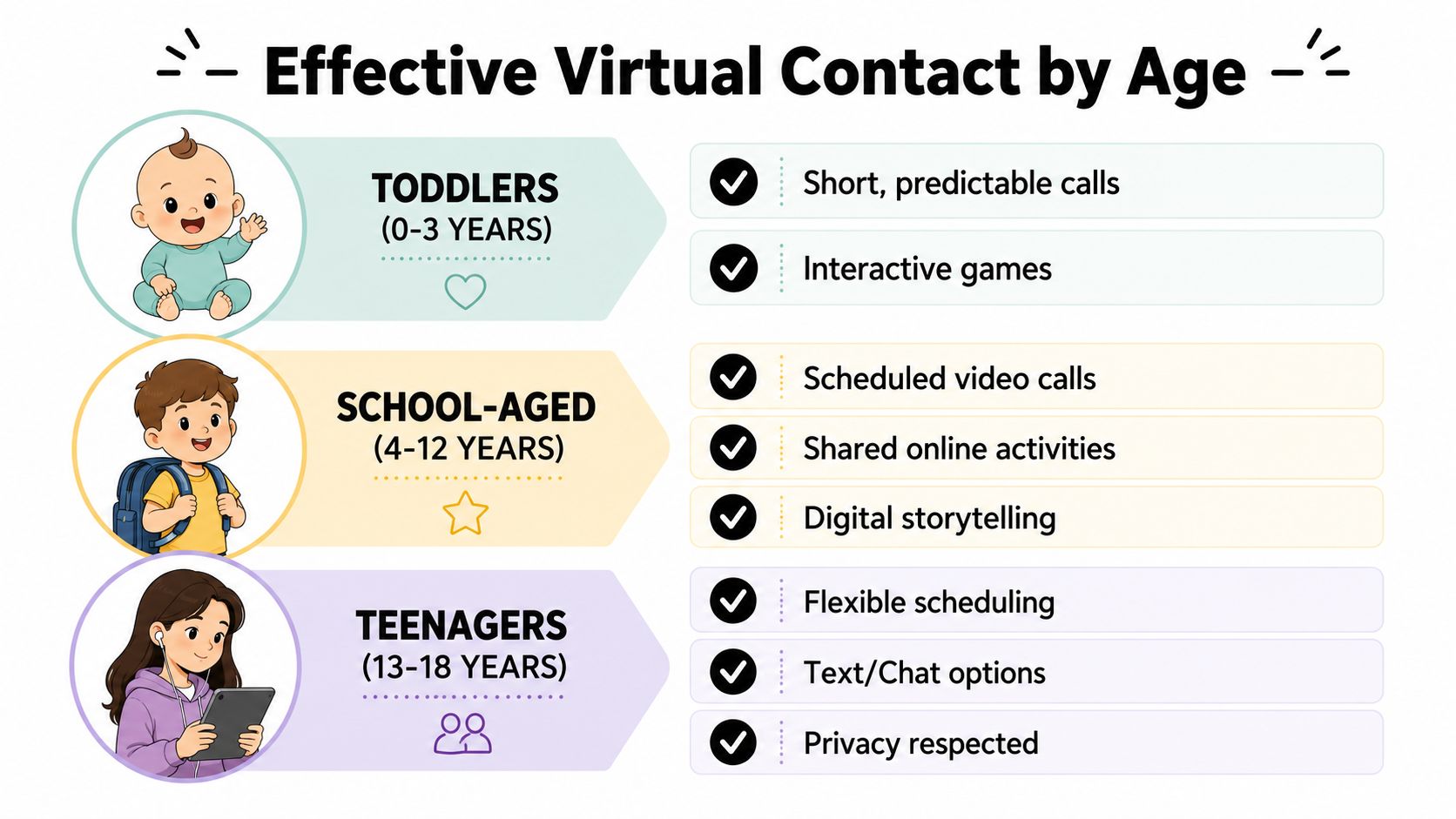
Age matters more than parents expect
A toddler usually can't handle a long, open-ended call. Short, predictable contact works better, especially when a caregiver helps with the transition. A school-age child may do better with shared reading, homework help, or a game that gives the call a purpose. A teenager often prefers low-pressure check-ins, text, or chat, because the contact has to respect privacy and the teen's schedule.
The important point is not just frequency, it's format. A strong virtual plan uses contact that fits the child's attention span and temperament. A generic “video calls as needed” clause leaves too much room for conflict. A better clause identifies what kind of contact happens, who starts it, and how long it lasts.
The Oregon State Bar family law section recommends designating specific times for the non-primary parent to have telephone or video contact via Skype or similar services, and also encouraging the child to initiate contact at other times. That kind of language turns virtual possession into a schedule instead of a wish. Oregon State Bar family law section
The common failure points
Parents usually stumble over the same three issues. Who initiates the call, which platform gets used, and when the child is available. If those points aren't written down, every missed call can become a fight about who broke the promise. The planning literature also shows why precision matters for travel logistics, expense allocation, and make-up time when delays occur. Oregon State Bar family law section
A practical protocol should state:
- Frequency: How often calls or video chats happen.
- Duration: How long each contact lasts.
- Platform: FaceTime, Zoom, Google Meet, WhatsApp, or another agreed tool.
- Backup method: What happens if the video call fails.
- School-night rules: Whether calls happen before homework, after dinner, or not at all on test nights.
- Child initiation: Whether the child may contact the distant parent outside scheduled windows.
Boundary language helps here: The child's right to call should be protected, but it shouldn't turn into constant interruptions during class or practice.
For families thinking about the educational side of distance, an online learning guide for parents can be helpful when virtual contact overlaps with homework support or screen-based routines. The point is to keep the call useful, not just frequent.
A companion resource on electronic communication orders in Texas custody cases can also help parents think through wording that keeps digital contact consistent and enforceable.
Choosing Communication and Tracking Tools That Hold Up
The best communication tool is the one both parents will use under stress. A text thread may feel easy, but it's often messy when you need records later. A co-parenting app costs more than a plain messaging app, but it can make a major difference when the plan needs to be enforced or explained to a court.
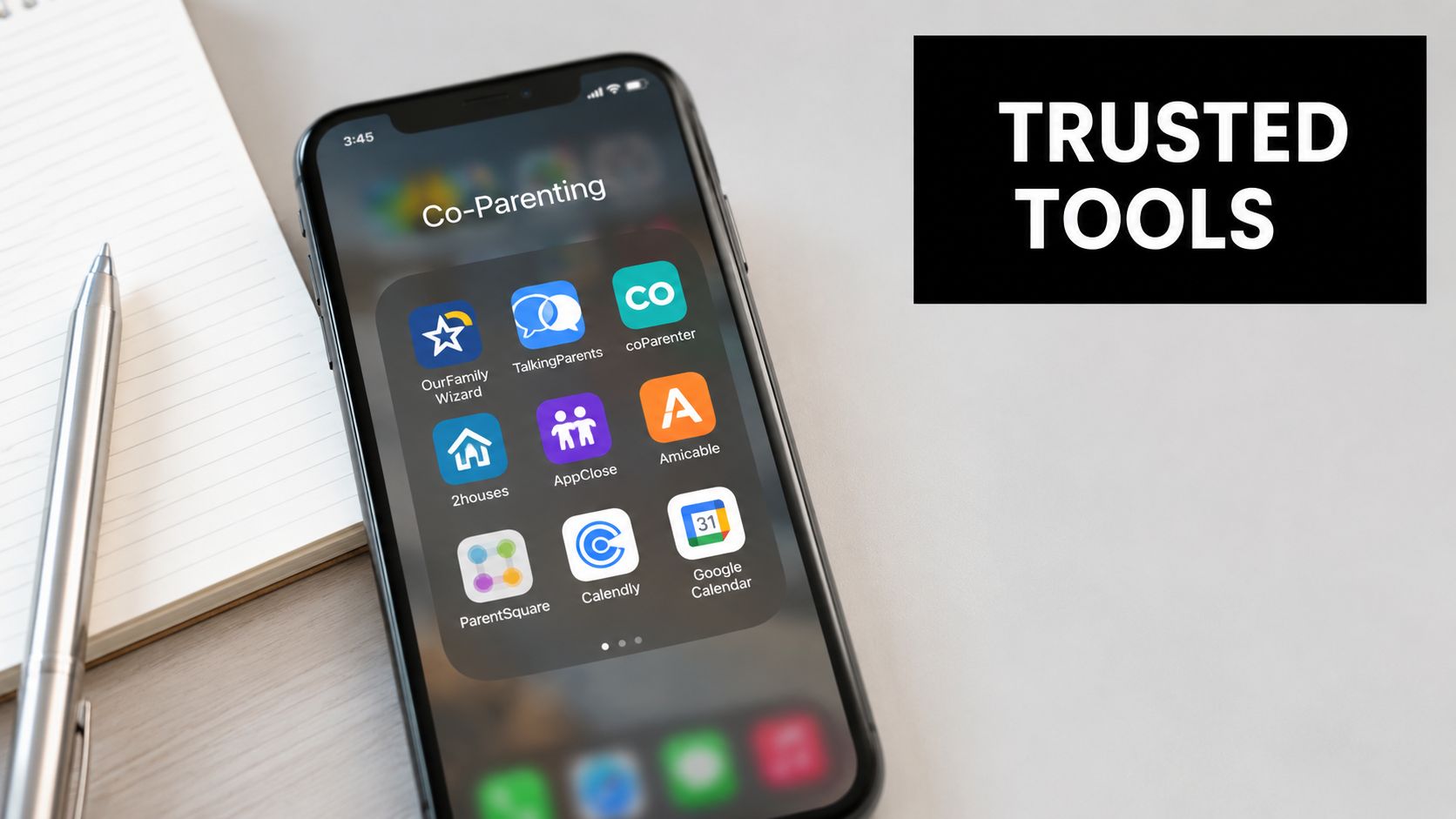
Compare the tools before you choose one
Built-in messaging tools are simple and familiar. Dedicated co-parenting platforms, such as OurFamilyWizard, TalkingParents, and AppClose, are built to organize messages, calendars, and records in one place. Consumer apps like FaceTime, Zoom, Google Calendar, and shared photo libraries are useful for day-to-day life, but they don't always give the same documentation value.
Florida's Supreme Court-approved relocation and long-distance parenting plan form shows how detailed these arrangements can get. The plan must spell out who handles daily child-rearing tasks, the exact time-sharing schedule, decision-making for health care and school matters, communication methods and technologies, and transportation arrangements. That level of detail is a reminder that courts often want precision, not just goodwill. Florida Supreme Court-approved form
Match the tool to the job
A shared calendar works well for school events, travel dates, and holiday blocks. Expense-splitting apps or simple shared spreadsheets can help track trip costs if the order divides them. A shared photo library can also help the distant parent stay connected to daily life without turning every update into a formal call.
If you want one system to do most of the work, a court-facing co-parenting app may be worth the subscription. If the relationship is calm and both parents communicate well, a calendar plus documented messaging may be enough. If conflict is already high, a platform that stores messages and time stamps can save both time and argument later.
For parents comparing app-based scheduling tools, a manage family schedules with an app resource can be a practical starting point for thinking about what kind of shared calendar will get used. I also tell parents to think about the smallest system that still creates a reliable record, because overcomplicated tools often get abandoned.
The right tech stack should make communication easier, not turn every exchange into a software lesson.
For parents who need help choosing between apps, texts, and order language, the team at Law Office of Bryan Fagan, PLLC works on custody, visitation, and communication issues in Texas family law cases. A parent doesn't need a perfect system on day one, but they do need one that can be explained, followed, and proven if necessary.
Modifying, Enforcing, and Knowing When to Call an Attorney
A long-distance plan that worked last year can stop working fast. A new job, a second move, a child's school transfer, or a change in travel costs can make the old order unrealistic. Texas law gives parents a way to ask for changes when the facts have changed enough that the current setup no longer fits the family's life.
When modification makes sense
Under Section 156.101, a parent can seek modification when circumstances have materially and substantially changed. That might mean a parent relocated again, the child changed schools, or the travel burden became too hard for the current order. Agreed changes are easier, but if the other side won't sign, a contested modification may be necessary. For a closer look at that process, see how to modify custody in Texas.
The documentation matters. Save the calendar, the messages about missed calls, flight receipts, and anything else that shows what's happening. Texas courts respond better to a clear record than to general frustration.
When enforcement becomes the issue
If a parent won't follow the order, enforcement tools exist. In Texas family law practice, that can include a motion to enforce, contempt remedies, and, in the right situation, a writ of habeas corpus when a child is being withheld. The remedy you choose depends on the problem and the proof you have. A missed video call is one thing. Repeated denial of possession is another.
Use records that match the problem:
- Missed virtual contact: Keep call logs, screenshots, and message threads.
- Denied visitation: Save dates, pickup attempts, and written refusals.
- Travel disputes: Keep receipts, booking confirmations, and exchange instructions.
- Withheld child: Document the last lawful exchange and the order terms.
If a parent keeps blocking contact, the pattern is the problem, not the last excuse.
The biggest red flags are persistent denial of virtual contact, unilateral relocation beyond what the order allows, or repeated missed possession. Those situations usually mean the plan isn't just inconvenient, it's no longer being followed. That's the point when a Texas custody lawyer can help you decide whether modification, enforcement, or both makes sense.
Key Takeaways and Your Next Steps
Distance changes custody planning in Texas because it changes the child's actual time with each parent. The 100-mile threshold matters, virtual contact has to be written down, and good documentation gives you options later if the plan stops working. Long-distance co-parenting is hard, but a clear order can make it steadier for everyone.
If you're trying to build or fix a long-distance parenting plan, The Law Office of Bryan Fagan, PLLC can help you review your options, draft practical possession terms, and protect your child's routine. Visit Law Office of Bryan Fagan, PLLC to learn more and schedule a free consultation about your Texas custody or visitation case. If you need help with a child custody or visitation case in Texas, our experienced attorneys can guide you every step of the way. Contact The Law Office of Bryan Fagan, PLLC today for a free consultation.